Hakone Shrine & Lake Ashi Torii Gate: Visitor Guide
How to reach Hakone Shrine from the Lake Ashi cruise, what the lakeside torii photo queue is like, how long to allow, what is free and what costs money, and where the shrine fits in a one-day Hakone loop.
Hakone Shrine is one of the most atmospheric stops on a Hakone day trip. Set in forest beside Lake Ashi, the shrine is best known for its red torii gate standing at the edge of the water. That lakeside gate has become one of Hakone’s most photographed sights, but the shrine itself deserves a visit even if you have no interest in queuing for the famous photo. For most first-time visitors, Hakone Shrine works best as the final major stop after Hakone Ropeway → Owakudani → Lake Ashi cruise → Hakone Shrine. On a guided day, the TAIHOU shared sightseeing tour makes the shrine its first stop before the ropeway and Owakudani, which is the same loop in reverse.
Check Availability
Tokyo: Mt. Fuji Tour, Hakone Ropeway, Owakudani, Lake Ashi — A shared Tokyo day trip linking Hakone Shrine, the ropeway and Owakudani with Lake Yamanaka and Oshino Hakkai. Cruise fare is extra.
What Is Hakone Shrine?
Hakone Shrine is a historic Shinto shrine in the Lake Ashi area of Hakone, founded in 757. It sits among tall cedar trees close to the lakeshore and has a very different feel from the crowded urban shrines many visitors see in Tokyo. The setting is one of the main reasons to visit.
Why Is Hakone Shrine Famous?
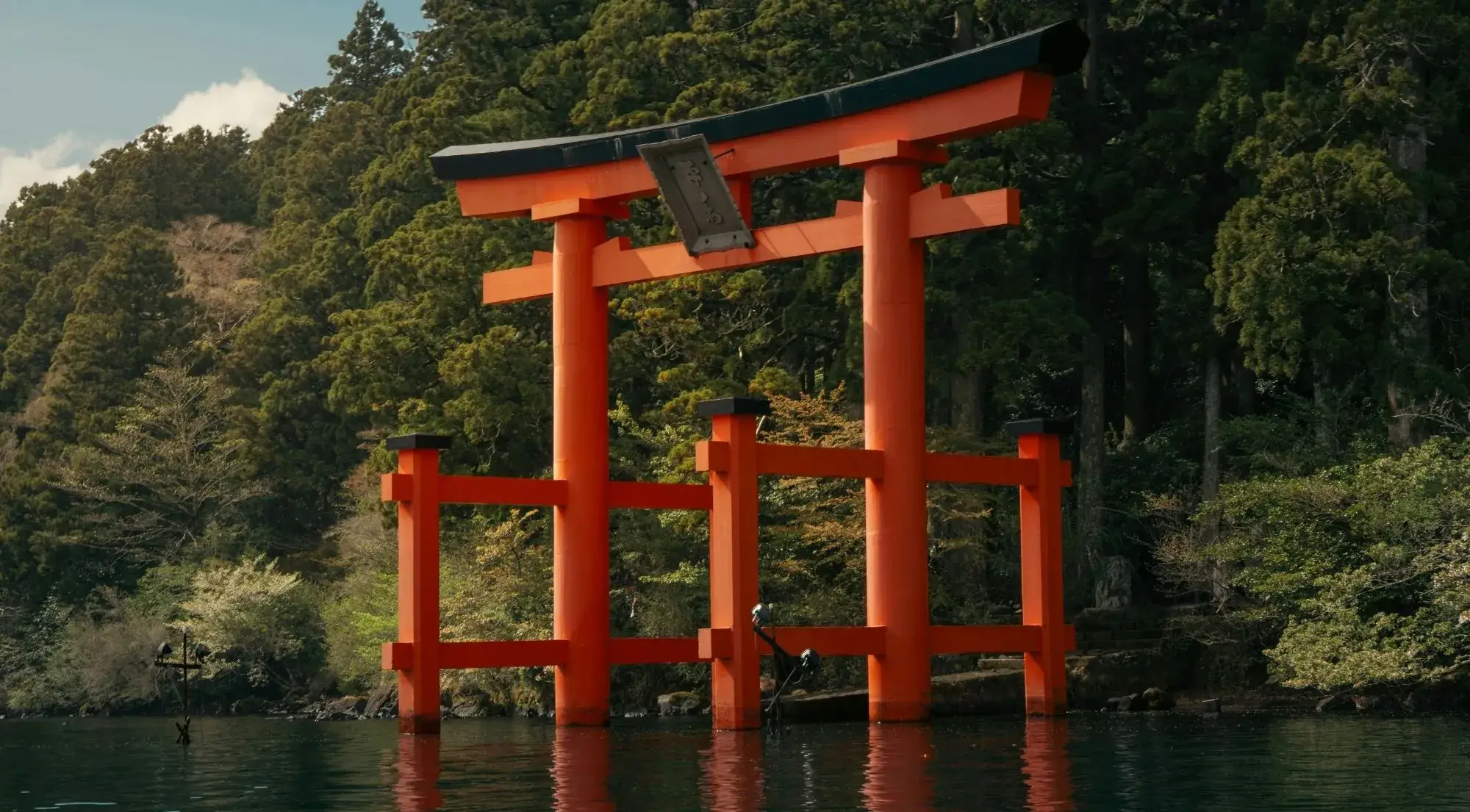
Most visitors recognize Hakone Shrine because of its lakeside torii gate. The bright red gate, known as the Peace Torii, stands at the edge of Lake Ashi and is often photographed with water and mountains behind it. The shrine is not just a photo stop, though: the approach through the forest and the main buildings at the top of the steps are the better part of the visit.
Is Hakone Shrine Worth Visiting?
Yes. For a first Hakone trip, I would include it. It gives the day a cultural stop after the mountain and lake scenery, and it costs nothing to walk in.
Where Is Hakone Shrine?
Hakone Shrine stands near Lake Ashi, on the southern side of the lake, about ten minutes’ walk from the Moto-Hakone cruise pier. For day-trippers, it is usually reached after taking the sightseeing cruise across Lake Ashi. The classic sequence is:
Owakudani → Togendai → Lake Ashi cruise → Moto-Hakone → Hakone Shrine
How to Get to Hakone Shrine From Tokyo
A common route is:
Tokyo → Hakone-Yumoto → Gora → Sounzan → Owakudani → Togendai → Lake Ashi cruise → Hakone Shrine
This is the scenic route. If Hakone Shrine is your main goal, you can also reach the Lake Ashi area by bus from Hakone-Yumoto without doing the full ropeway loop. Our Tokyo to Hakone transport guide covers the first leg from the city, and the Hakone pirate ship guide covers the crossing that delivers you to Moto-Hakone.
The Famous Lake Ashi Torii Gate
The torii gate is the image most people associate with Hakone Shrine. It stands directly beside the lake and creates one of Hakone’s most recognizable compositions. The problem is that many visitors want the exact same photo. At busy times, a queue forms for the spot directly beneath the gate, and it can run long enough to eat a sizeable part of an afternoon.
Is the Torii Photo Worth Queuing For?
Sometimes. If the queue is short and the photo matters to you, wait. If the queue is long and you only have one day in Hakone, I would skip it. You can still see the gate and take good photos from the lakeside path and from the boat.
Best Time to Visit Hakone Shrine
For day-trippers, the best time is often the afternoon because it fits naturally after Lake Ashi. If Hakone Shrine is your top priority and you want fewer people, visiting earlier can help.
Morning vs Afternoon
Morning
Potential advantages:
- fewer visitors
- quieter atmosphere
- shorter photo queue
Afternoon
Potential advantages:
- fits perfectly after the Lake Ashi cruise
- easier to combine with Owakudani and the ropeway
- avoids backtracking
For a normal first-time day trip, afternoon usually works best.
How Much Time Do You Need?
Allow roughly 45–90 minutes. That is enough to see the lakeside torii, walk through the shrine grounds, climb the steps, visit the main buildings and take photographs. If you queue for the classic torii photo, add more time.
What Should You See at Hakone Shrine?
Do not rush straight to the torii and leave. Take time to see:
- the lakeside gate
- the forest path
- the stone steps
- the shrine buildings
- the lantern-lined approaches
- the Lake Ashi surroundings
If you have time, the Treasure Hall beside the main shrine holds the shrine’s historic objects, and Kuzuryu Shrine, a smaller shrine to the lake’s dragon deity, sits within the same grounds.
Is Hakone Shrine Free?
Yes. The shrine grounds, the approach and the lakeside torii can all be visited without any admission charge. The only paid part is the Treasure Hall, which costs ¥500 for adults and ¥300 for children and is open from 9:00 to 16:00. The shrine office that sells amulets and stamps is open from 8:15 to 17:00.
Is Hakone Shrine Included in the Hakone Freepass?
You do not need the Freepass to enter the shrine itself, because entry is free. The pass is useful for reaching it, though, because it covers the cruise, the ropeway and the buses used in the classic Hakone loop. Our Hakone Freepass guide explains what it covers.
Hakone Shrine and Mount Fuji
The wider Lake Ashi area can offer Fuji views, but do not assume you will get a perfect torii, lake and Mount Fuji composition. Cloud hides the mountain on many days, so plan the visit for the gate and the forest and treat Fuji as a bonus.
Hakone Shrine vs Owakudani
These are completely different experiences. Choose Owakudani for volcanic scenery, the ropeway and Fuji views. Choose Hakone Shrine for forest, history, culture and Lake Ashi. For a full day trip, you should not have to choose: our Hakone Ropeway guide covers the Owakudani side of the loop.
Hakone Shrine vs Open-Air Museum
For a first visit, I would usually prioritize Hakone Shrine. The museum is excellent, but the shrine is more closely tied to the classic Hakone experience, and it sits on the loop rather than beside it.
Hakone Shrine in Rain
The shrine can be very atmospheric in rain or mist. The forest becomes darker and quieter, and the lake can feel dramatic.
Hakone Shrine in Fall
Fall is one of the most attractive seasons. The forest and surrounding hills can show strong seasonal color, and it is also one of the busiest periods on the loop.
Hakone Shrine in Winter
Winter can be quieter and can provide clearer long-distance views around Lake Ashi. It can also be cold, especially near the water.
Can You Visit Hakone Shrine Without Taking the Pirate Ship?
Yes. You can reach the Lake Ashi area by bus. That may be better if the cruise is suspended or you are short on time.
Can You Visit Without the Ropeway?
Yes. You do not need the ropeway to reach Hakone Shrine. If you are doing the full classic loop, though, the sequence ropeway → cruise → shrine is one of the most efficient sightseeing combinations in Hakone.
Can You Do Hakone Shrine and an Onsen in One Day?
Yes. A reasonable route could be:
Tokyo → Lake Ashi → Hakone Shrine → onsen → Tokyo
or:
Tokyo → Owakudani → Lake Ashi → shrine → onsen
The second version is much fuller. Our onsen day-trip page covers the bathing side of the day.
Best Hakone Shrine Day-Trip Route
For first-time visitors:
Morning: Tokyo → Hakone-Yumoto → Gora
Late morning: Sounzan → ropeway → Owakudani
Early afternoon: Owakudani → Togendai
Afternoon: Lake Ashi cruise
Later afternoon: Hakone Shrine → lakeside torii
Evening: Return toward Hakone-Yumoto → Tokyo
Our one-day Hakone itinerary gives each of those steps a time.
What to Do After Hakone Shrine
Most day-trippers should begin heading back toward Hakone-Yumoto. Depending on time, you could also eat around Moto-Hakone, walk along Lake Ashi, stop for a short break or visit an onsen later. The return bus from Moto-Hakone to Hakone-Yumoto is covered by the Freepass.
Common Mistakes
Only visiting for the photo
The shrine deserves more than five minutes.
Waiting too long for the torii queue
If the wait is excessive, move on.
Arriving too late
Do not leave the entire Lake Ashi area until the very end of the day. The Treasure Hall closes at 16:00 and the light goes early in winter.
Expecting Mount Fuji
Fuji is a bonus, not a guarantee.
Final Verdict
Hakone Shrine is worth more than the famous photograph. The lakeside torii is beautiful, but the better reason to visit is the setting:
Lake Ashi → forest → stone steps → shrine
If you are doing a one-day Hakone loop, visit after the lake cruise, see the torii, walk into the forest and give the shrine enough time to feel like more than an Instagram stop. Our Lake Ashi guide covers the lake, the piers and the rest of the southern shore.
Make a Day for Hakone
Choose your departure point, check the inclusions and leave your evening flexible for the journey back.
Check Dates & Prices