Hakone Ropeway Guide: Owakudani, Tickets & Mt Fuji Views
How the Hakone Ropeway links Sounzan, Owakudani and Lake Ashi, how long to allow, when it closes, what the Freepass covers and where the Mount Fuji views come.
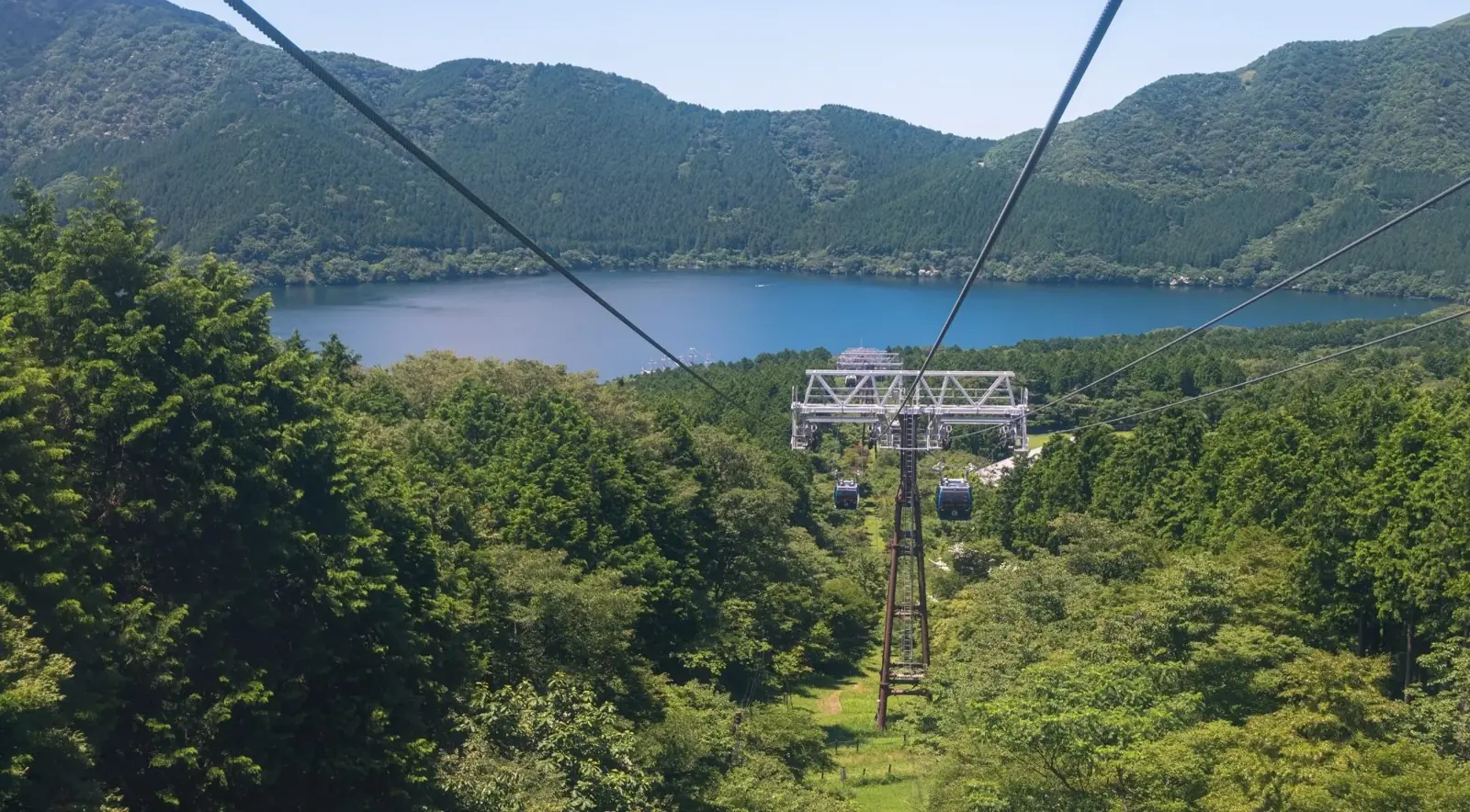
The Hakone Ropeway is one of the highlights of a first trip to Hakone, and it is more than a cable car between two attractions. The route crosses one of the most dramatic parts of Hakone’s volcanic area, stops above the steaming valley of Owakudani and continues down to Lake Ashi, with Mount Fuji in view on clear days. For many visitors it is the most memorable section of the classic sightseeing loop.
Check Availability
Tokyo: Mt. Fuji Tour, Hakone Ropeway, Owakudani, Lake Ashi — A shared Tokyo day trip linking Hakone Shrine, the ropeway and Owakudani with Lake Yamanaka and Oshino Hakkai. Cruise fare is extra.
What Is the Hakone Ropeway?
The Hakone Ropeway is a gondola line connecting the higher mountain areas of Hakone. The main sightseeing route runs:
Sounzan → Owakudani → Ubako → Togendai
Togendai sits on the northern shore of Lake Ashi, which makes the ropeway the natural link between the mountain half of Hakone and the sightseeing cruise across the lake.
Where Does the Hakone Ropeway Start?
Most first-time visitors board at Sounzan. A typical journey from Tokyo runs:
Tokyo → Hakone-Yumoto → Gora → Sounzan → Hakone Ropeway
From Sounzan you ride to Owakudani. After stopping there, you continue on the ropeway toward Togendai and Lake Ashi. Our Tokyo to Hakone transport guide covers the first part of that journey, from the Romancecar to the highway bus.
Is the Hakone Ropeway Worth It?
For a first visit, yes. In one ride it gives you:
- mountain scenery
- volcanic landscapes
- Owakudani
- possible Mount Fuji views
- transport to Lake Ashi
If you are doing the classic Hakone loop, skipping the ropeway would remove one of the strongest transitions of the day.
How Long Is the Hakone Ropeway Ride?
Think of it as two sightseeing sections rather than one uninterrupted ride:
Sounzan → Owakudani
then
Owakudani → Togendai
Allow roughly 1.5 to 2 hours for the whole ropeway section, including your stop at Owakudani.
Hakone Ropeway and Owakudani
Owakudani is the main reason to get off the ropeway partway. This volcanic valley is one of Hakone’s most distinctive landscapes: geothermal steam, bare volcanic ground, sulfurous vents, mountain views and, in clear weather, Mount Fuji.
How Long Should You Spend at Owakudani?
For most day-trippers, 45–60 minutes is enough. That gives you time to walk the main viewing area, see the geothermal landscape, look for Mount Fuji and try the black eggs.
Can You See Mount Fuji From the Hakone Ropeway?
Yes, when the weather is clear. The ropeway and Owakudani are among the best places in Hakone to catch a view of Mount Fuji.
The mountain is never guaranteed, though, and the volcanic terrain and the ride itself still make a good morning without it.
Where Is the Best Fuji View on the Ropeway?
The best chances generally come around Owakudani and on the stretches of the ropeway descending toward the Lake Ashi side.
If Fuji is visible when you arrive, take the photograph then. Cloud can build quickly.
Is Morning Better for Mount Fuji Views?
Often, yes. That is one reason I prefer riding the ropeway before lunch on a Hakone day trip.
Going early also means you are not leaving one of the most weather-dependent parts of the itinerary until late afternoon, when a suspension or a bank of cloud leaves you no time to come back for it.
Hakone Ropeway Opening Hours
The ropeway runs during daytime sightseeing hours. Operating times vary by season and can also be affected by:
- weather
- wind
- maintenance
- safety inspections
- volcanic conditions
Check the ropeway operator’s current status page before you travel.
Does the Hakone Ropeway Close in Bad Weather?
Yes, it can. Strong wind and other adverse conditions can suspend service.
What Happens if the Hakone Ropeway Is Closed?
You can still build a good day around:
- Lake Ashi
- Hakone Shrine
- Hakone-Yumoto
- Gora
- the Hakone Open-Air Museum
- an onsen
- bus routes around Hakone
If the ropeway is your main priority, check the operating status before leaving Tokyo. Our best things to do in Hakone lists the stops that still work on a day when it is not running.
How Much Does the Hakone Ropeway Cost?
You can buy separate ropeway tickets, but many day-trippers use the Hakone Freepass instead. The pass covers the ropeway along with most of the other transport on the Hakone loop.
On a guided day, check what the fare covers. The TAIHOU shared sightseeing tour and the Clover Travel day trip each include a one-way ropeway ticket, while the Lake Ashi cruise is an extra fee on both.
Is the Hakone Ropeway Included in the Hakone Freepass?
Yes. That makes the pass especially useful if your day includes the train, the cable car, the ropeway, the Lake Ashi cruise and buses. Our Hakone Freepass guide sets out where it pays for itself and where separate tickets come out ahead.
Do You Need to Reserve the Hakone Ropeway?
Normally, no. You do not reserve an individual gondola; you arrive and join the boarding queue.
During busy periods, queues can form, particularly around Owakudani.
When Is the Hakone Ropeway Busiest?
Expect more visitors during:
- weekends
- public holidays
- the fall foliage season
- cherry blossom season
- Golden Week
- clear days with good Fuji visibility
Is the Hakone Ropeway Scary?
For most people, no. The cabins are enclosed gondolas.
You do travel high above steep mountain terrain, so anyone very uncomfortable with heights may find parts of the ride hard going.
What Is Owakudani?
Owakudani is an active volcanic valley in the Hakone area. Steam rises from the ground and from vents across the mountainside, and it is the clearest reminder on the loop that Hakone is a volcanic landscape.
What Are the Black Eggs at Owakudani?
Owakudani is famous for eggs cooked in the area’s geothermal heat. The mineral-rich water turns their shells black. They taste much more normal than they look.
Is Owakudani Safe?
The publicly accessible areas are managed for visitors, but Owakudani is an active volcanic environment. Follow current local guidance and stay out of closed areas.
Hakone Ropeway to Lake Ashi
After Owakudani, continue to Togendai. There you transfer to the Hakone Sightseeing Cruise and cross Lake Ashi, which gives you the classic sequence:
Ropeway → Owakudani → Ropeway → Lake Ashi cruise
Our Lake Ashi guide picks up from the pier at Togendai.
Hakone Ropeway and Pirate Ship in One Day
Yes, and you should normally combine them. A common route is:
Sounzan → Owakudani → Togendai → Lake Ashi cruise
The advantage is that there is almost no backtracking. If you would rather have both tickets in one guided package, the H.I.S. Fuji and Hakone tour with a bullet-train return includes the ropeway and the Lake Ashi cruise; our cruise and ropeway comparison shows what each listing covers.
Which Direction Should You Ride the Ropeway?
For most visitors coming from Tokyo:
Sounzan → Owakudani → Togendai
This works naturally with a morning arrival through Hakone-Yumoto and Gora.
Hakone Ropeway vs Hakone Cable Car
These are not the same thing.
The Hakone Tozan Cable Car connects Gora with Sounzan.
The Hakone Ropeway continues from Sounzan across the mountains to Owakudani and Togendai.
Most visitors doing the full loop use both.
Best Time of Year for the Hakone Ropeway
The ropeway is worth riding in any season, and each one looks different from the cabin.
Spring
Mild weather and fresh mountain scenery.
Summer
Green landscapes, but humidity and cloud can make Fuji harder to see.
Fall
Fine mountain scenery and foliage.
Winter
Cold, but often the best season for clear long-distance views of Mount Fuji.
What Should You Wear?
Dress for the mountains, not only for Tokyo. Even when Tokyo feels mild, the higher parts of Hakone can be colder, windier and more exposed. Bring layers.
How Much Time Should You Allow for the Ropeway?
Allow roughly 90 minutes to 2 hours for the ropeway ride, the Owakudani stop and the continuation to Togendai.
What Should You Do After the Hakone Ropeway?
The natural next step is the Lake Ashi sightseeing cruise. From Togendai, cross the lake toward Moto-Hakone or Hakone-machi, then visit Hakone Shrine.
Best Hakone Ropeway Day-Trip Route
For a first visit from Tokyo:
Tokyo → Hakone-Yumoto → Gora → Sounzan → Hakone Ropeway → Owakudani → Ropeway → Togendai → Lake Ashi → Hakone Shrine → Tokyo
For most first-time visitors, the ropeway is not something I would merely add to the day. I would plan the rest of the day from it. Our one-day Hakone itinerary follows this route stop by stop, with the times each section takes.
Make a Day for Hakone
Choose your departure point, check the inclusions and leave your evening flexible for the journey back.
Check Dates & Prices