Hakone in Winter: Day Trip Guide for December 2026 to February 2027
Hakone works well as a winter day trip from Tokyo if you plan around the cold, the early sunset and two scheduled ropeway closures in 2026–27.
Hakone is a good winter day trip from Tokyo, especially if you want snow-capped Mount Fuji, the steam of Owakudani, a Lake Ashi cruise or a cold afternoon in an onsen. You need a slightly different plan from a spring or autumn visit: it is colder than Tokyo, the sightseeing day is shorter, and parts of the Hakone Ropeway close for scheduled maintenance in December 2026 and from January to February 2027.
Check Availability
Tokyo: Mt. Fuji Tour, Hakone Ropeway, Owakudani, Lake Ashi — A shared Tokyo day trip linking Hakone Shrine, the ropeway and Owakudani with Lake Yamanaka and Oshino Hakkai. Cruise fare is extra.
Choose your itinerary by your travel date. Do not assume every section of the classic Hakone loop will be running.
Quick answer: December, January and February all work for Hakone. Winter often brings clearer Mount Fuji views, but snow is not guaranteed. Leave Tokyo early, dress for mountain weather, check the ropeway and cruise the night before, and allow extra time for buses if you visit during the 2026–27 maintenance periods.
Hakone in Winter at a Glance
| Question | Winter planning answer |
|---|---|
| Is Hakone open in winter? | Yes. The major attractions operate in winter, although weather or maintenance can suspend individual services. |
| Can you see Mount Fuji? | Yes, when the sky is clear. Winter often gives better long-distance visibility than summer, but no view is guaranteed. |
| Does it snow? | Sometimes, mostly at higher elevations. Do not plan on snow for a specific date. |
| Is the Hakone Ropeway open? | Partly, on some dates. See the two maintenance periods below. |
| Is the Lake Ashi cruise open? | It usually runs year-round on a seasonal timetable, subject to weather and service changes. |
| How long should you allow? | A full day from Tokyo; leave around 7–8 a.m. if you want several attractions. |
| Do you need a car? | No. Trains, buses, the ropeway and the cruise serve the main sightseeing areas. |
| Best winter experience | A clear-weather Fuji viewpoint followed by Owakudani, Lake Ashi or a hot spring. |
Is Hakone Worth Visiting in Winter?
Yes, if you are going for Hakone itself and not for a guaranteed Fuji view or a snowy landscape.
Winter changes the look of Hakone. The trees around Lake Ashi lose their autumn colors, which opens up views of the mountains. The air can be crisp and clear, and Mount Fuji often carries snow on its upper slopes. The steam rising from Owakudani looks more dramatic in the cold, and an outdoor hot spring is more appealing when the air is chilly.
There are trade-offs. You may wait longer outdoors for transport, paths can be slippery after frost or snow, and the early sunset leaves less time for a long itinerary. Strong wind can suspend the ropeway or the sightseeing boats even on a day without snow.
Winter suits visitors who enjoy scenery, photography, onsen, short walks and a flexible plan. If you need warm weather, long daylight hours or the full ropeway on a fixed date, another season may suit you better.
For a general introduction to the route, read our complete Hakone day trip guide from Tokyo.
Hakone Weather in December, January and February
Hakone does not have one climate. Hakone-Yumoto sits lower and is usually milder than Gora, Owakudani and the Lake Ashi area. You can leave a fairly comfortable Tokyo morning and meet a strong cold wind at the mountain stations.
The official Hakone tourism guide publishes these winter averages for Hakonemachi. They are monthly average temperatures, not a forecast and not a daytime high.
| Month | Published average temperature | What to expect |
|---|---|---|
| December | 3.4°C (38°F) | Cold mornings and evenings; short days; possible frost at elevation. |
| January | 0.4°C (33°F) | Often the coldest month, with freezing conditions possible in the mountain areas. |
| February | 1.7°C (35°F) | Still cold, though daylight slowly increases. |
Source: Hakone Navi, Winter Seasonal Highlights. Conditions vary with altitude, wind and the day’s weather.
Does it snow in Hakone in winter?
Snow is possible in all three months but never guaranteed. The higher roads and viewpoints can be icy or snowy while the streets near Hakone-Yumoto stay clear.
If you want deep snow to play in, Hakone is not a dependable choice. If you want a snow-capped Mount Fuji in the distance, a clear day can give you that without any snow on the ground in Hakone.
Check the forecast for the area you will visit, not just “Tokyo” or “Hakone,” and pay attention to wind and possible road disruption.
Is December, January or February the best month?
- December: Good for crisp scenery and an onsen visit, but the Sounzan–Owakudani ropeway section is scheduled to close from 7 to 24 December 2026. Our guide to Hakone in December 2026 has a route for each part of the month.
- January: Usually the coldest month and good for winter scenery. Avoid 2–3 January 2027 if you need easy bus travel, because of the Hakone Ekiden, and allow for ropeway maintenance from 12 January. Our guide to Hakone in January 2027 splits the month into its three travel periods.
- February: The sightseeing day gets a little longer as sunset moves later, but the Owakudani–Togendai ropeway section is scheduled to stay closed until 26 February 2027.
If you need the full ropeway ride, pick a date outside those maintenance windows and still check for weather suspensions.
Important: Hakone Ropeway Closures in Winter 2026–27
The Hakone Ropeway operator has announced two periods of partial closure for maintenance, with replacement buses. Hakone itself stays open on these dates.
| Dates (inclusive) | Ropeway section not operating | What still runs |
|---|---|---|
| 7–24 December 2026 | Sounzan ↔ Owakudani | Ropeway between Owakudani, Ubako and Togendai |
| 12 January–26 February 2027 | Owakudani ↔ Ubako ↔ Togendai | Ropeway between Sounzan and Owakudani |
The operator plans replacement buses about every 15 minutes on the affected sections, but queues and road congestion can make the trip much longer. Valid ropeway tickets, including the Hakone Freepass, are accepted on the replacement buses. The operator recommends reaching Owakudani from the section that stays open where you can.
Source: Odakyu Hakone’s September 2026 maintenance notice (PDF). Our Hakone Ropeway closures 2026–2027 guide covers the replacement buses and routes in more detail.
The regular ropeway hours are 9:00 a.m. to 4:15 p.m. in December and January and 9:00 a.m. to 5:00 p.m. in February. Weather, inspections or other operational needs can change them; check the official ropeway page and live transport status before setting off.
What if you visit from 7 to 24 December 2026?
The lake-side ropeway section runs, so approach Owakudani from Togendai instead of Sounzan.
An easier sightseeing plan:
Hakone-Yumoto → bus to Moto-Hakone → Hakone Shrine → Lake Ashi cruise to Togendai → ropeway to Owakudani → back to Togendai and bus toward Hakone-Yumoto.
You ride the operating section twice, but you spend little of the day on the crowded replacement bus. To complete the full circuit, continue from Owakudani to Sounzan on the replacement bus and go down through Gora; allow plenty of extra time.
What if you visit from 12 January to 26 February 2027?
The Gora-side ropeway section stays open. Approach Owakudani from Sounzan:
Hakone-Yumoto → mountain train to Gora → cable car to Sounzan → ropeway to Owakudani → back to Sounzan → Gora museum or onsen → Hakone-Yumoto.
This makes a complete winter day even without Lake Ashi. If you also want the lake, you need a bus or the replacement service, so be realistic about the time it adds.
Do not book a winter tour on the words “Hakone Ropeway included” alone. Check which section the tour rides and how the operator will adapt the itinerary on your date.
Best Hakone Winter Day Trip from Tokyo: Full Loop Itinerary
Use this route on a day when all the main transport sections run. On maintenance dates, use the routes above instead.
| Approximate time | Stop | Winter-specific advice |
|---|---|---|
| 7:00–8:00 a.m. | Depart Shinjuku | Take an early train; the direct Romancecar is convenient. |
| 9:00–9:30 a.m. | Hakone-Yumoto | Connect quickly toward Gora instead of spending your best daylight hour shopping. |
| 10:00–10:45 a.m. | Gora → Sounzan | Take the mountain train and cable car; check queues and service status. |
| 10:45 a.m.–noon | Ropeway and Owakudani | Look for Fuji if it is clear, explore the viewing area and warm up indoors if needed. |
| Noon–1:00 p.m. | Ropeway to Togendai | This section can give good Fuji and Lake Ashi views when visibility allows. |
| 1:00–2:00 p.m. | Lake Ashi sightseeing cruise | Check the actual sailing; winter departures are not continuous. |
| 2:00–3:30 p.m. | Moto-Hakone and Hakone Shrine | Walk to the shrine, enjoy the lakeshore and get a snack or late lunch. |
| 3:30–5:00 p.m. | Bus toward Hakone-Yumoto | Allow more time than the timetable suggests if the roads are busy. |
| Evening | Return to Tokyo | A reserved train home makes the end of a cold day easier. |
These are planning windows, not confirmed departures, and your connections may shift the day. The timings leave little room for a long sit-down lunch or an onsen. If you want to bathe, drop a major attraction instead of trying to fit everything in.
Our one-day Hakone loop itinerary explains the standard route in more detail.
What Are the Best Things to Do in Hakone in Winter?
1. Look for Mount Fuji from Owakudani or Lake Ashi
Clear winter skies can make Mount Fuji look sharp against the surrounding mountains. On a standard sightseeing day your best chances are at Owakudani, on the ropeway when that section runs, and on the Lake Ashi shore around Moto-Hakone.
Cloud can hide Fuji at any time. If you see it in the morning, take your photos then; it may not stay visible all afternoon. See our guide to the best places to see Mount Fuji from Hakone.
2. Visit Owakudani’s volcanic landscape
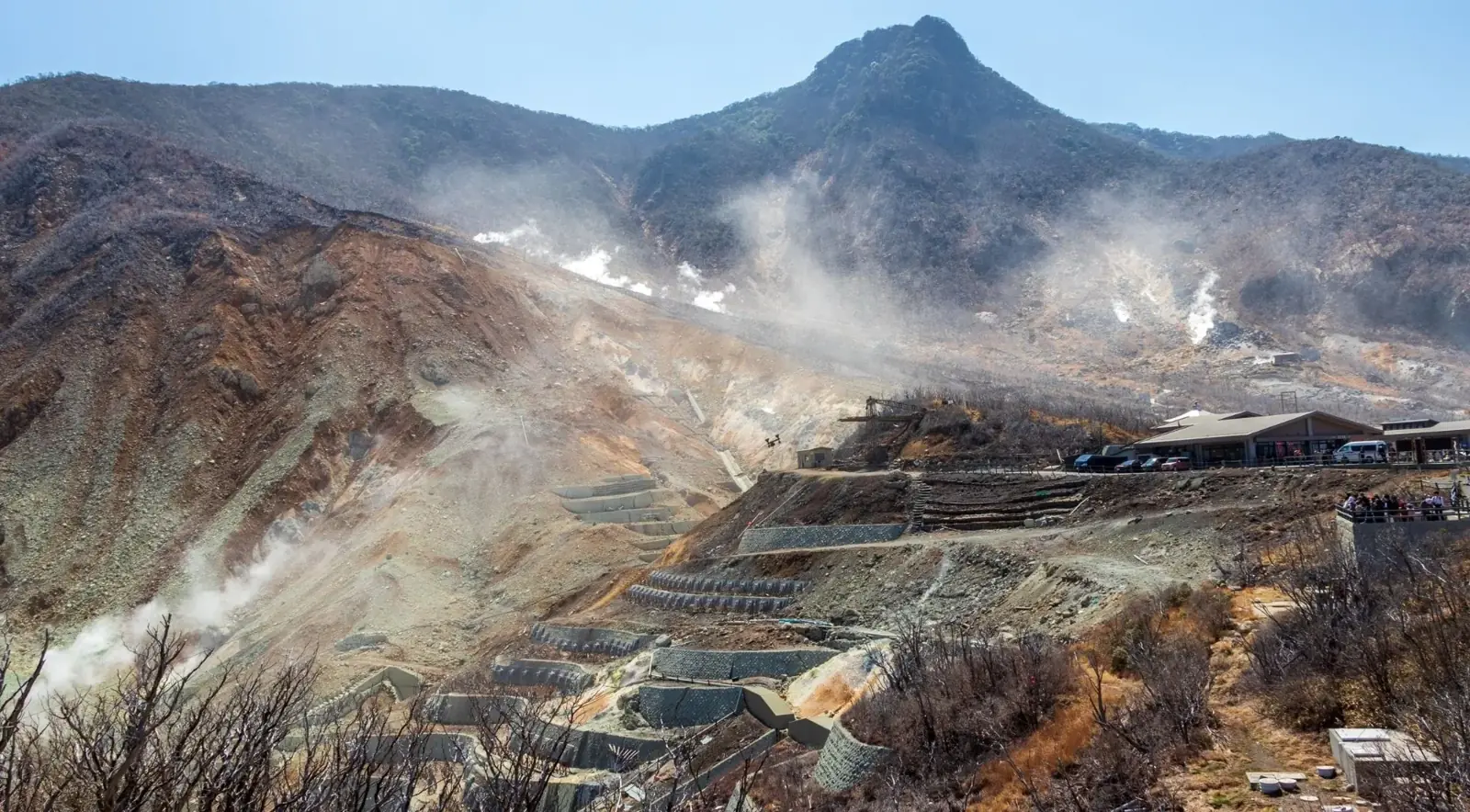
The cold air makes Owakudani’s steaming slopes stand out. You can see the terrain from the ropeway and from the designated visitor areas, and you can try the black eggs, cooked in the volcanic heat.
Stay on the permitted paths, respect any gas warnings and follow the instructions on site. Weather or volcanic conditions can restrict access. The main viewing area is separate from the guided nature-trail walk, which has its own conditions and booking rules.
3. Cruise Lake Ashi
The sightseeing boats link Togendai, Hakone-machi and Moto-Hakone, so they work as transport as well as an attraction. A one-way cruise takes about 25–40 minutes, depending on the sailing and stops. In winter the boats follow a seasonal timetable, and wind or poor weather can stop them.
Bring a warm layer if you want to stand on the open deck; there are sheltered areas on board too. See the official Hakone Sightseeing Cruise information and check sailing times before you travel.
4. Visit Hakone Shrine and the lakeside torii
The forest approach to Hakone Shrine is atmospheric in winter, and the red torii gate beside Lake Ashi is one of Hakone’s best-known photo spots. The lakeside can be windy, and the photo spot can still have a queue in the colder months.
New Year is busier than a quiet winter weekday: people visit shrines for hatsumode, the first shrine visit of the year. Expect more visitors around 1 January and the days after. Our Hakone Shrine guide covers access and the lakefront area.
5. Warm up in an onsen
A hot spring may be the best way to spend a winter afternoon. Hakone-Yumoto is convenient if you want to go back to Tokyo without more mountain connections; Gora also has onsen.
Not every ryokan admits day visitors, and a daytime bath may have limited hours or need an advance booking. Check each facility’s policy, including tattoo rules and whether private baths are available. If bathing matters more to you than the loop, see our Hakone onsen day trip guide.
6. Choose the Hakone Open-Air Museum on a dry day
The Hakone Open-Air Museum combines outdoor sculpture with indoor galleries, so it makes a good alternative to a transport-heavy mountain day. It is close to Gora, which helps during the January–February ropeway maintenance.
The museum opens from 9:00 a.m. to 5:00 p.m., with last entry at 4:30 p.m., every day of the year. The outdoor areas can be uncomfortable in snow or strong wind, and individual installations may be closed. Check the museum’s official visitor information for current details.
What If It Rains, Snows or Mount Fuji Is Hidden?
Do not force the full loop when visibility is poor or major services are suspended. Pick one smaller area and enjoy it properly.
| Weather or transport problem | Better plan |
|---|---|
| Mount Fuji hidden by cloud | Keep Owakudani, Hakone Shrine or the lake if services run, and enjoy them without chasing the view. |
| Ropeway suspended by wind | Use buses where available or switch to Gora, the Open-Air Museum and an onsen. |
| Cruise canceled | Reach the lakeshore and shrine by bus, or stay on the Gora side instead of waiting for the boats to restart. |
| Snow or ice on the roads | Choose places you can reach by rail around Hakone-Yumoto and Gora; check service updates before leaving. |
| Heavy rain or severe cold | Plan the day around a museum, a meal and a pre-booked hot-spring visit. |
A suspended ropeway is disappointing if it was your main reason for coming, but two or three comfortable stops can still make a better day than an ambitious circuit.
Getting to Hakone from Tokyo in Winter
Romancecar from Shinjuku
The Odakyu Limited Express Romancecar is the easiest option for many people staying near Shinjuku. Direct trains reach Hakone-Yumoto in about 80 minutes, with reserved seats and no change. Reserve if you travel on a busy holiday or want a particular departure.
Regular Odakyu trains
Ordinary Odakyu trains are usually cheaper, but the trip takes longer and may need a change. They suit you if you are watching your budget and do not mind a less comfortable start or finish.
Via Odawara
If you are staying near Tokyo Station or Shinagawa, compare a JR train to Odawara followed by local transport into Hakone. It can save crossing Tokyo to Shinjuku, although the cost and convenience depend on where you start.
For fares and journey times, read our Tokyo to Hakone train guide.
Winter travel tip: Keep your return flexible if you travel independently. A late bus from Lake Ashi, a replacement-bus queue or a weather suspension can break a tight evening connection.
Is the Hakone Freepass Worth It in Winter?
The Hakone Freepass covers designated transport, including the Hakone Tozan Railway and cable car, the ropeway, the Hakone Sightseeing Cruise and specified buses. It is convenient for the full sightseeing loop even on a one-day visit, although the shortest pass is valid for two days.
The published 2026 adult two-day pass costs ¥7,100 from Shinjuku and ¥6,000 from Odawara. The Romancecar reserved seat costs extra: ¥1,200 each way between Shinjuku and Hakone-Yumoto for an adult. The Shinjuku Freepass with a Romancecar seat in both directions comes to ¥9,500, before meals or attractions with their own admission.
The best-value ticket depends on your route:
- Full loop with train, cable car, ropeway, cruise and bus: the Freepass usually pays off.
- Short Gora museum trip or Hakone-Yumoto onsen visit: single fares may be cheaper.
- Maintenance-period trip: the pass covers the operator’s replacement bus, but work out whether you will use enough of the network to justify the price.
- Guided tour from Tokyo: check whether transport and attraction tickets are already included; you may not need a pass.
See the Hakone Freepass cost comparison and the official Odakyu pass information. Prices and conditions can change, so check them before you buy.
Self-Guided Hakone or a Winter Day Tour from Tokyo?
A self-guided day trip gives you control. If Mount Fuji is visible early, you can stay at a viewpoint. If the ropeway is suspended, you can swap Owakudani for a museum or an onsen. The drawback is managing the train, bus, ropeway and cruise connections yourself.
A guided day tour is easier if you want a single booking, do not want to coordinate several services, or travel with children or a group. Tours are not immune to disruption: they may change stops, shorten a ride or substitute transport when weather or maintenance affects the route.
Before you book a winter tour, check four things: the travel date, whether the ropeway section on the itinerary is running, whether the Lake Ashi cruise ticket is included, and what the provider does if either ride is unavailable. Some tours sold as Hakone trips also add Lake Yamanaka, Oshino Hakkai or other Fuji-area stops, which makes a much longer day than a Hakone-only route.
Two shared tours show the difference. The $54 TAIHOU tour (4.6/5 from more than 8,500 reviews) includes a one-way ropeway ticket and adds Lake Yamanaka and Oshino Hakkai, but the cruise fare is extra. The $115 H.I.S. tour with a bullet-train return (4.2/5 from more than 1,700 reviews) includes both the ropeway and the Lake Ashi cruise tickets. Pick TAIHOU for the lower price and the extra Fuji stops, or H.I.S. if you want both rides covered in one booking.
Compare the other options in our guide to choosing a Hakone tour from Tokyo.
What to Wear and Pack for Hakone in Winter
Dress for the highest and windiest stop, not for the temperature outside your Tokyo hotel.
- Warm base layer and a sweater or fleece: useful when you move between heated vehicles and exposed viewpoints.
- Windproof winter coat: most needed at Owakudani, the ropeway stations and Lake Ashi.
- Gloves, hat and scarf: easy to take off indoors, welcome while you wait outside.
- Comfortable shoes with good grip: wear water-resistant shoes if frost, rain or snow is forecast; avoid smooth soles.
- Small umbrella or waterproof outer layer: mountain weather can change quickly.
- Portable phone charger: navigation, photos and transport checks drain the battery.
- Water and a snack: helpful if buses run late or restaurant lines are long.
You do not usually need snow boots for a clear winter day, but the forecast and ground conditions matter more than the calendar. If heavy snow or ice is expected, skip the exposed walks and check road and transport notices.
Christmas, New Year and the Hakone Ekiden
Christmas Day is not a public holiday in Japan, so Hakone is not closed on 25 December. Individual hotels, restaurants and attractions can still set their own hours, so check the ones you want to visit. Our guide to Hakone in December 2026 includes a Christmas Day plan.
New Year is a much bigger holiday. Hakone Shrine draws visitors making their first shrine visit of the year, transport can be busy, and some businesses change their hours.
On 2 and 3 January 2027 the Hakone Ekiden university relay race runs between Tokyo and Hakone. Road closures and congestion along the route can affect buses and car tours. If you are not going to watch the race, avoid those dates for a tight sightseeing loop. Our guide to Hakone in January 2027 lists your options for the race weekend. See Hakone Navi’s crowd advice and current operator announcements.
Final Advice: The Best Way to Enjoy Hakone in Winter
A shorter, well-planned day works best in winter. Choose one scenic highlight, one cultural or indoor stop, and leave time to enjoy the journey. If every transport section runs, the classic mix of Owakudani, Lake Ashi and Hakone Shrine is excellent. During ropeway maintenance, stay on the operating side of the mountain instead of crossing every section just to complete a loop.
If seeing Mount Fuji matters to you, check the morning forecast and keep a backup plan. If you want to relax, plan the trip around an onsen instead of squeezing one in at the end of a full itinerary.
Before leaving Tokyo, check: Hakone live transport status, ropeway service and hours, the Lake Ashi cruise timetable, and any updates to the 2026–27 maintenance notice.
Hakone in Winter: Frequently Asked Questions
Is Hakone worth visiting in December?
Yes. December can bring clear Mount Fuji views, cold mountain scenery and good onsen weather. From 7 to 24 December 2026, though, the ropeway between Sounzan and Owakudani is closed for maintenance, with replacement buses. Plan around your date instead of assuming the standard loop will run without a break. Our December 2026 guide has a lake-first route for the closure.
Is Hakone worth visiting in January?
Yes, especially for onsen and winter scenery. January is usually colder, and 2–3 January 2027 brings the Hakone Ekiden and its road closures. From 12 January 2027 the Owakudani–Togendai ropeway section is closed for maintenance. Our January 2027 guide shows which dates suit the classic loop.
Is Hakone worth visiting in February?
Yes. February is still cold, but the days are getting longer. The Owakudani–Togendai ropeway section is scheduled to stay closed until 26 February 2027, so a Gora–Sounzan–Owakudani route works best on those dates.
Can you see Mount Fuji from Hakone in winter?
Yes, on a clear day. Owakudani, the operating ropeway sections and parts of the Lake Ashi shore can give views. Winter often has better visibility than the humid summer months, but cloud can still hide Fuji completely.
Is there always snow in Hakone in January or February?
No. Snow can fall, mostly at higher elevations, but you cannot count on it for a given day. Snow on Mount Fuji does not mean snow on Hakone’s roads or footpaths.
Is the Hakone Ropeway closed all winter?
No. The 2026–27 maintenance affects specific sections on specific dates, not the whole ropeway for the whole season. Weather can cause extra short-notice suspensions, so check the operator’s live notices.
Does the Hakone Freepass cover replacement buses?
Yes. The operator’s September 2026 notice says valid Hakone Ropeway tickets, including the Hakone Freepass, are accepted on the replacement buses on the affected sections. Check the ticket conditions and bus arrangements for your date.
Can you ride the Lake Ashi pirate ship in winter?
Usually yes, on the seasonal timetable and subject to weather. The boats do not sail in high winds or other unsafe conditions. Check the day’s departures before you plan your return connection around them.
Is a Hakone winter day trip too cold for children?
Not necessarily. It works if you allow indoor time to warm up, bring the right clothing and keep the route short. A museum and a short lakeside visit usually suit young children better than hours of outdoor queues and transfers.
Should you stay overnight in Hakone in winter?
Stay overnight if a relaxed onsen or ryokan stay is your main goal. A day trip covers several of the main sights, but a night in Hakone removes the pressure of the last connection to Tokyo and gives you a second chance if the weather spoils the first day.
Last checked: 2 November 2026. Maintenance dates, pass fares and opening hours were checked against official operator information. Weather, volcanic conditions, road closures and transport services can change at short notice; use the linked official sources before you travel.
Make a Day for Hakone
Choose your departure point, check the inclusions and leave your evening flexible for the journey back.
Check Dates & Prices