Hakone in January 2027: Snow, Onsen, Ropeway Closure and New Year Travel
Plan a January 2027 Hakone day trip from Tokyo around New Year, the 2–3 January Ekiden, the ropeway closure from 12 January, snow, onsen and Fuji views.
January is a rewarding month for a Hakone day trip from Tokyo, as long as you plan around three very different parts of the month. Cold air makes snowy Mount Fuji look sharp on a clear morning, hot springs are at their most inviting, and the steam at Owakudani stands out in winter. But 1–3 January brings New Year crowds and the Hakone Ekiden road race, and from 12 January 2027 part of the Hakone Ropeway is replaced by buses.
Check Availability
Tokyo: Mt. Fuji Tour, Hakone Ropeway, Owakudani, Lake Ashi — A shared Tokyo day trip linking Hakone Shrine, the ropeway and Owakudani with Lake Yamanaka and Oshino Hakkai. Cruise fare is extra.
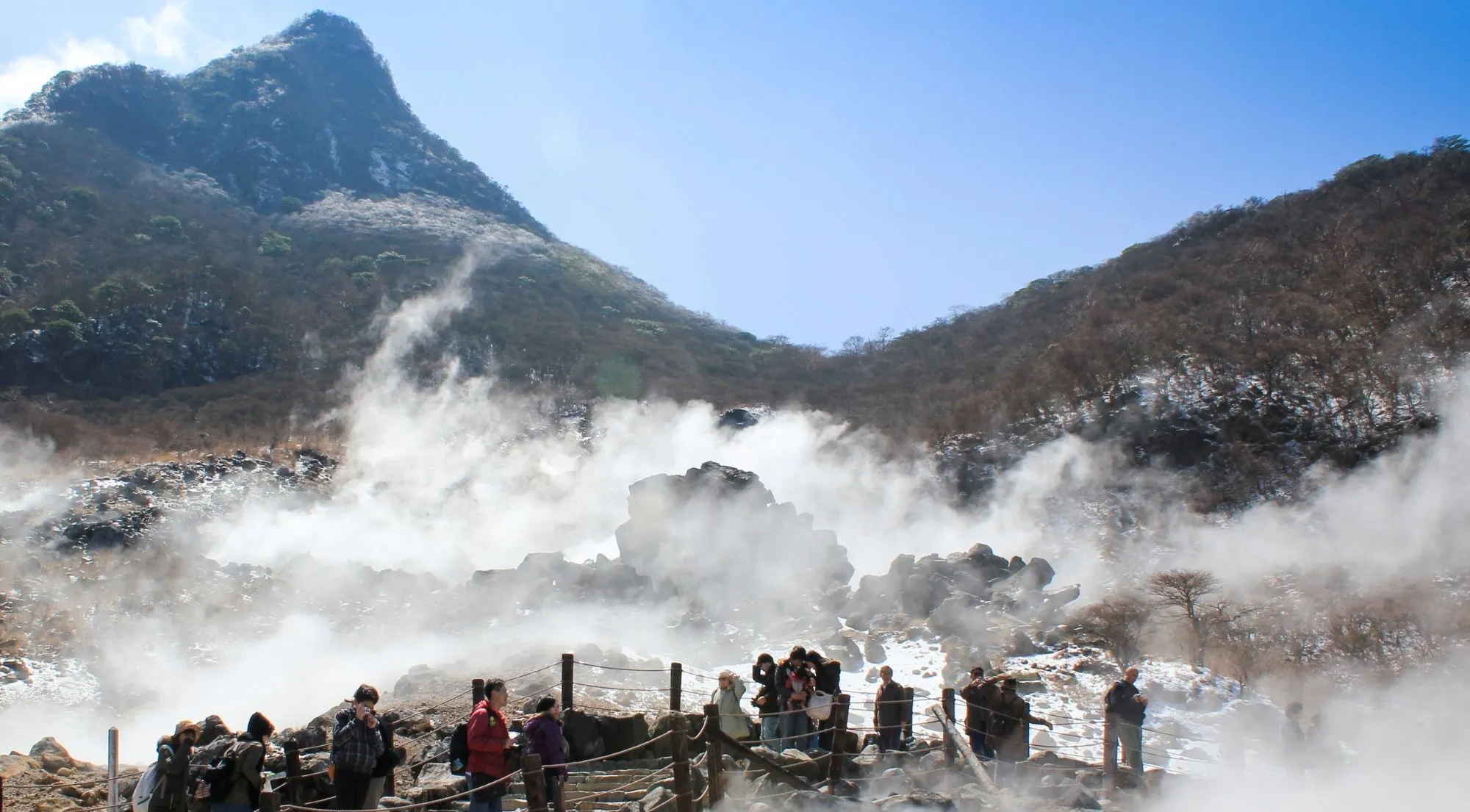
If your dates are flexible, 4–11 January is the easiest time for a classic first-time loop, weather and transport permitting. From 12 January, reach Owakudani via Gora and Sounzan, because the ropeway toward Lake Ashi is replaced by buses. On 2–3 January, the Ekiden makes a bus-heavy day a poor choice, although trains still get you to Hakone.
Quick answer: Hakone is worth a January 2027 day trip, but pack for freezing mountain weather, not Tokyo. The official winter guide gives a January average of 0.4°C (33°F) for Hakone-machi. Snow is possible but never guaranteed. The ropeway runs 9:00 to 16:15 in January, and its Owakudani–Ubako–Togendai section is closed from 12 January to 26 February 2027, with replacement buses. Check the latest service notices before you set off.
Hakone in January 2027 at a Glance
| Question | January 2027 answer |
|---|---|
| Is January a good time to visit? | Yes, for clear-day scenery, Fuji views and onsen, but it is cold and the dates matter. |
| How cold is it? | Very cold in the mountains. Hakone-machi’s January average is 0.4°C, and it varies a lot with altitude. |
| Does it snow? | Sometimes, mostly higher up. Neither snowfall nor lying snow is guaranteed on your date. |
| Can you see Mount Fuji? | Yes, when visibility is good. Winter often brings crisp views, but cloud can hide Fuji. |
| Are things open on New Year’s Day? | Many sights and transport services run, but hours change and some places close. Gora Park closes on 1 January. |
| What happens on 2–3 January? | The Hakone Ekiden runs on both days, with crowds and traffic controls along the course. |
| When does the ropeway change? | From 12 January to 26 February 2027, the Owakudani–Ubako–Togendai section is replaced by buses. |
| Which ropeway section still runs? | Sounzan–Owakudani, subject to the usual weather and safety conditions. |
| Usual ropeway hours in January | 9:00–16:15, with possible suspensions. |
| Best time for the classic loop | 4–11 January, if services and weather allow. |
| Best plan from 12 January | Gora → Sounzan → Owakudani, then back via Sounzan, or allow extra time for the replacement bus. |
| How long is a trip from Tokyo? | A full day, with an early start from Tokyo. |
For the whole season, including December and February, start with our Hakone in winter guide. This page covers January 2027 and the choices that change through the month. If you are going before New Year, our Hakone in December 2026 guide covers the first ropeway closure and Christmas.
The Three January Travel Periods You Need to Know
January in Hakone is not one season. The dates you pick make the difference between a smooth day and a string of queues.
1–3 January: New Year and the Hakone Ekiden
1 January is the main day for hatsumode, the first shrine visit of the year, and Hakone Shrine draws large crowds for it. Expect queues and a busy lakeside, and do not count on a quick photo under the torii.
On 2–3 January the 103rd Hakone Ekiden runs, a university relay race between Tokyo and Hakone. The course uses Hakone’s main roads, and parts of it are closed to traffic while the runners pass. That affects buses, cars, taxis, tour itineraries and how long it takes to get back from the lake.
The organizers have confirmed the dates, but the 2027 road-closure times have not been published yet. Check the latest notices from the organizers, the police and the bus operators before you go, and do not rely on a previous year’s timetable.
If you want an ordinary first-time sightseeing day, not the race or the New Year crowds, travel after 3 January.
4–11 January: The best window for the classic loop
The operator’s maintenance notice schedules no ropeway closure between 4 and 11 January 2027, so this is the easiest time for the full mountain-to-lake circuit:
Hakone-Yumoto → Gora → Sounzan → Owakudani → Togendai → Lake Ashi → Hakone Shrine → back to Tokyo.
That does not guarantee every service runs. Strong wind, snow, inspections or other safety issues can stop the ropeway and the cruise at short notice, and in January the ropeway runs only from 9:00 to 16:15.
11 January 2027 is Coming of Age Day, a public holiday in Japan. Expect busier trains and sights than on a normal weekday, and book your train or tour early.
12–31 January: A partial ropeway closure changes the route
From Tuesday 12 January, the section between Owakudani and Togendai via Ubako stops for maintenance. The closure lasts until 26 February 2027.
What that means on the ground:
- Running gondolas: Sounzan ↔ Owakudani.
- Replacement buses: Owakudani ↔ Ubako ↔ Togendai.
- Best way to Owakudani: from Gora and Sounzan, on the gondolas still running.
- Tickets: Valid ropeway tickets, including the Hakone Freepass, are accepted on the replacement buses.
- Frequency: Buses run about every 15 minutes during ropeway hours.
- Risk: The operator warns of crowded buses and congestion on the road to Owakudani.
Only one section closes. You can still ride a gondola to the volcanic valley from the Gora side, and you can still reach Lake Ashi; you just lose the seamless ropeway link across the mountain.
Our Hakone Ropeway closures 2026–2027 guide has the route details, replacement-bus rules and alternatives.
What Is Hakone Weather Like in January?
Expect much colder weather than in central Tokyo, especially at Gora, Owakudani and Lake Ashi. Hakone spans a big range of altitude, and a mild arrival at Hakone-Yumoto tells you little about a windy platform above the volcanic valley.
The official Hakone winter guide lists these January figures for Hakone-machi:
| Published January figure | Value |
|---|---|
| Monthly average temperature | 0.4°C (33°F) |
| Highest figure listed | 10.1°C (50°F) |
| Lowest figure listed | −9.1°C (16°F) |
These are climate figures, not a forecast. The high and low are the extremes the guide lists, not the usual range on a January day. Use them to judge how cold Hakone can get, then check the forecast for your date and the places you will visit.
The guide also notes that higher areas are especially cold, and the Lake Ashi and Owakudani areas are noticeably colder than Hakone-Yumoto.
Does it snow in Hakone in January?
Snow is possible in January, but Hakone is not a reliable snow destination. Higher roads, wooded slopes and viewpoints may get snow or ice while Hakone-Yumoto stays wet or clear, and some years are much snowier than others.
Visitors often mix up two things:
- Seeing snow-capped Mount Fuji from Hakone: a common winter photo goal when skies are clear.
- Finding deep snow on the ground in Hakone: something you should not count on for a day trip.
Even light snow or an overnight freeze matters for travel. Slippery stone steps, icy paths and late mountain buses affect your day more than the snow scenery does.
If the forecast calls for snow or strong wind, cut the itinerary down, avoid tight transfers and follow the operator’s latest service updates. A museum on the railway or a day-use onsen is often a better plan than the full loop.
Will Hakone be sunny in January?
Many January days are crisp and bright, but a sunny Tokyo forecast does not mean sun at Lake Ashi or Owakudani. Cloud can hide Mount Fuji even while the sun shines where you stand.
For a Fuji-focused trip, check the forecast and live cameras for the Hakone and Fuji area, not central Tokyo. Head to your chosen viewpoint early if visibility looks promising, and treat a clear view as a bonus.
Can You See Mount Fuji From Hakone in January?
Yes. January can bring excellent views of snowy Mount Fuji, but cloud, haze, rain or snow and your exact spot all affect whether it shows. No guide or tour can promise the mountain.
Good places to look:
- Owakudani: The volcanic valley often frames a wide view of Fuji, and it is the natural winter viewpoint when you arrive by ropeway from Sounzan.
- The Sounzan–Owakudani ropeway: On clear days the view opens up during the ride as well as at the station.
- Lake Ashi: The lake and Mount Fuji form the classic picture when the clouds allow, from the lakeside viewpoints and from the sightseeing boats.
- Viewpoints near Moto-Hakone: The lake, the mountains and the shrine area look good even when Fuji is hidden.
From 12 January 2027, the Owakudani–Togendai section will not offer its usual gondola views. You can still see Fuji from the Sounzan–Owakudani side in good weather, but do not book expecting the usual ride down to Lake Ashi.
If Fuji is the main reason you are leaving Tokyo, compare Hakone with a Fuji-focused trip in our Hakone or Mt Fuji guide. Hakone adds volcanic scenery, hot springs, the lake and a shrine to the possible mountain views, so it makes a more varied day than a pure Fuji photo outing.
January 2027 Itinerary #1: Classic Hakone Loop (4–11 January)
Best for: first-time visitors who want the mountain railway, Owakudani, a Lake Ashi boat and Hakone Shrine in one day.
Use this plan only when the ropeway and the cruise are running normally. The times are a sample, not a timetable; check real departures and the last services of the day before you book a train from Tokyo.
| Approximate time | Plan | Winter advice |
|---|---|---|
| 07:00–08:00 | Leave Shinjuku for Hakone-Yumoto | Reserve an early Romancecar seat for a direct trip. |
| 08:30–09:30 | Arrive at Hakone-Yumoto and continue toward Gora | Allow time for the mountain railway and connections. |
| 10:00–10:45 | Gora → cable car → Sounzan | Keep a warm layer handy. |
| 10:45–12:00 | Ropeway to Owakudani; explore the viewpoints | Check the wind and the view; the volcanic valley is worth it even without Fuji. |
| 12:00–13:00 | Ropeway on to Togendai | This section runs until 11 January, subject to daily status. |
| 13:00–14:15 | Lake Ashi sightseeing cruise to the south shore | Use the actual winter timetable; this slot is only an example. |
| 14:15–15:30 | Visit Hakone Shrine and the lakeside torii | Keep it short if buses are crowded or the light is going. |
| 15:30 onward | Bus toward Hakone-Yumoto, then train to Tokyo | Head back before you depend on the last useful connection. |
This is close to our Hakone one-day itinerary, adjusted for January’s shorter hours and colder weather.
How to make the classic loop less rushed
Do not add a two-hour onsen, a long museum visit and a torii photo queue to this plan. You can fit one of those extras by dropping part of the loop, but January is not the month to assume every transfer will be quick.
If wind stops the ropeway or the cruise, take a direct bus where one runs instead of holding on to the original order. You can still have a good day without finishing the circuit.
January 2027 Itinerary #2: Owakudani and Onsen (12–31 January)
Best for: visitors during the partial closure who want a real gondola ride and the volcanic valley without relying on replacement buses across the whole mountain.
Route: Tokyo → Hakone-Yumoto → Gora → Sounzan → Owakudani → Sounzan → Gora → Hakone-Yumoto → day-use onsen → Tokyo.
| Approximate time | Plan | Why this works |
|---|---|---|
| 07:00–08:00 | Leave Tokyo | An early arrival gives you slack if trains are busy. |
| 09:00–10:30 | Reach Gora and take the cable car to Sounzan | The usual rail and cable car approach. |
| 10:30–12:00 | Ride the Sounzan–Owakudani ropeway, see the valley and look for Fuji | You skip the closed Owakudani–Togendai section entirely. |
| 12:00–13:30 | Back through Sounzan and Gora; stop for lunch | Time for connections and a warm meal. |
| 13:30–16:30 | Down to Hakone-Yumoto for a day-use onsen | A relaxed finish that does not depend on reaching Lake Ashi. |
| Late afternoon or evening | Return to Tokyo | Check your train time against the bath’s day-use hours. |
A bath near Hakone-Yumoto is handy for the train home. Hakone Yuryo, for example, is a day-use hot spring a short shuttle ride from Hakone-Yumoto, with private baths at extra cost; check its booking system, fees and shuttle times before you go.
The trade-off is that this plan skips Lake Ashi and Hakone Shrine. For many January visitors, that beats spending a large part of the day waiting for road transport in the cold.
For baths and etiquette, see our Hakone onsen day-trip guide.
January 2027 Itinerary #3: Lake Ashi and Hakone Shrine Without the Ropeway
Best for: people who care more about the lake and the shrine than about Owakudani, anyone uneasy with heights, and days with strong wind or ropeway maintenance.
Route: Tokyo → Hakone-Yumoto or Odawara → bus to Moto-Hakone → Hakone Shrine → lakeside walk or cruise if running → back toward Hakone-Yumoto → Tokyo.
A workable day:
- Leave Tokyo early and take the train to Hakone.
- Take a scheduled bus toward Moto-Hakone. Check the route and road conditions, because snow and traffic can slow the buses.
- Visit Hakone Shrine and walk down to the lakeside torii if the path is safe.
- Have lunch by the lake. If a cruise is running and fits your return route, take it; otherwise walk along the shore.
- Head back before the busiest late-afternoon buses and return to Tokyo.
This plan works well if the replacement buses from 12 to 31 January are crowded, since it does not use the ropeway to reach the lake. On 2–3 January, though, the Ekiden can block the very road you need, so pick another date for it if you can.
Our Lake Ashi guide covers the piers and cruises, and the Hakone Shrine guide covers the approach, the torii and how long to allow.
The Hakone Ekiden: Should You Visit on 2 or 3 January 2027?
If you want to watch the race, it is an exciting time to be in Hakone. For a normal sightseeing day, it is one of the least convenient weekends of the month.
The Hakone Ekiden is a two-day university relay. Runners head from Tokyo to Hakone on Saturday 2 January 2027 and back toward Tokyo on Sunday 3 January. Big crowds line the route, and the police close roads to traffic while the runners pass.
What changes for ordinary tourists?
- Road travel slows or stops for a while along parts of the course.
- Buses, taxis and driving tours may be delayed, diverted or suspended.
- Lake Ashi and Moto-Hakone plans can suffer, because the Hakone end of the race is at the lake.
- Trains to Hakone still run, but a train ticket does not get you past bus disruption higher up.
- Open does not mean easy to reach. A museum, shrine or viewpoint may be open but hard to get to at the time you planned.
The 2027 road-closure plan has not been published yet; check it closer to the race, and do not treat last year’s bus suspension times as this year’s.
The sensible options on 2–3 January
Option A, reschedule: for an ordinary sightseeing loop, go on 4–8 January instead if you can.
Option B, stay near the railway: keep to Hakone-Yumoto or, if the rail and cable car run normally, parts of Gora. Use as few buses as possible and leave plenty of time to get back.
Option C, go for the Ekiden: plan the day around watching the race, not around a sightseeing loop. Follow the official Hakone Ekiden spectator guidance and local police and transport announcements.
Hakone Shrine is busy with hatsumode visitors over these days, so the torii photo can mean a long wait. You can enjoy the forest and the main shrine grounds without an hour in the photo queue; our Hakone Shrine guide has the timings.
Best Things to Do in Hakone in January
1. Ride the operating section of the Hakone Ropeway
From 12 January, the ride to take is Sounzan–Owakudani. You still glide over the volcanic landscape by gondola. Watch the weather and the 16:15 closing time; service can stop earlier when conditions require it.
2. Visit Owakudani
Steam vents, bare slopes and mountain views make Owakudani a strong winter stop. It is exposed, so the wind makes it feel colder than the forecast. Buy the famous black eggs if they are on sale, and do not assume the volcanic trails are open: some routes are closed or need a guide.
3. Take a Lake Ashi sightseeing cruise
The lake looks lovely in winter when the mountains are clear. The cruise is part of the usual loop and also links the lake piers. Check the winter timetable and the live service status; strong wind can cancel sailings, and the last useful boat leaves earlier than many visitors expect.
4. Visit Hakone Shrine
The red torii by the lake and the forest approach make a memorable winter walk. 1–3 January is different because of New Year visits and the race. On other days, the shrine pairs naturally with a Lake Ashi itinerary.
5. Spend the afternoon in an onsen
For many January visitors, the bath is the best part of the day. You do not need a ryokan booking to soak in Hakone: several facilities take day visitors, though booking and availability vary. Hakone-Yumoto is the convenient choice; go elsewhere in Hakone if the bath itself is the main event.
Japanese baths have rules on washing before you get in, swimwear, tattoos and children. Private baths may be bookable, usually for an extra fee on top of standard admission.
6. Visit the Hakone Open-Air Museum
The museum by Chokokunomori Station is a good Gora-area stop for art lovers. Much of it is outdoors, though, so it is no escape from the cold. It opens daily from 9:00 to 17:00 (last entry 16:30); adult tickets cost ¥2,000 at the gate or ¥1,800 online.
7. Explore Hakone-Yumoto
Hakone-Yumoto suits a day with fewer transfers: a warm lunch, small shops and an onsen without a big mountain plan. It is also the fallback when snow, wind or a late start from Tokyo makes the higher areas impractical.
8. Visit Gora Park on an open day
Gora Park opens 9:30 to 16:30 in winter (last entry 16:00) and closes for maintenance on 1 January and on the third Monday of January, which in 2027 is 18 January. Check the official page if the park is a must for your day.
The park pairs well with Gora and the Open-Air Museum, but leave it out of a 1 January or 18 January plan.
Is a Hakone Onsen Worth It in January?
Yes. After an hour in cold mountain air, a hot bath and a slow break are a better use of time than one more bus transfer.
There are three ways to plan it:
| Onsen approach | Best for | Trade-off |
|---|---|---|
| Onsen-only day in Hakone-Yumoto | Relaxing, first-time bathers, slower travelers | You miss most of the mountain sights. |
| Owakudani plus onsen | 12–31 January, when the lake side of the ropeway is closed | No Lake Ashi cruise unless you make the day much longer. |
| Overnight ryokan with private or shared baths | Couples and anyone who wants sightseeing and a long soak | Higher cost and an extra day. |
Can you visit an onsen without staying overnight?
Yes, at some facilities. Check whether they take day guests, whether you need to book, the last entry time and the tattoo policy. A place described as an onsen hotel does not always take walk-in visitors. Our guide to visiting a Hakone onsen without staying overnight lists the options.
Should you put the onsen first or last?
If you also want a gondola or a boat, do the time-sensitive sightseeing first. The mountain sights close early in January, and a bath is easier to fit in later. Some day-use baths also have short hours, so check yours before you fix the plan.
Getting to Hakone From Tokyo in January
From Shinjuku, the Odakyu Romancecar is the easiest way to reach Hakone-Yumoto without changing trains. You can also take regular Odakyu trains, or, from Tokyo Station or Shinagawa, a Shinkansen to Odawara and local transport from there.
Adult fares as of November 2026:
| Option | Adult cost | What to know |
|---|---|---|
| Regular Odakyu train: Shinjuku → Hakone-Yumoto | ¥1,270 one way | Takes longer and usually needs a change. |
| Romancecar: Shinjuku → Hakone-Yumoto | ¥2,470 one way | The ¥1,270 fare plus the ¥1,200 limited-express fee. |
| Shinkansen: Tokyo or Shinagawa → Odawara | Check the current JR fare | Fast to Odawara, but you still have to travel on into Hakone. |
Fares can change before your trip. For the full comparison, read our Tokyo to Hakone train prices and times guide.
Is driving a good idea?
On 2–3 January, driving is especially awkward because of the Ekiden road closures. On other January dates, snow, ice and traffic can still make it stressful. For independent visitors a train-based plan is simpler, and a tour makes sense if the operator explains its winter route and what it does when plans change.
Is the Hakone Freepass Worth It in January 2027?
That depends on how much of the covered transport you use, not on the length of your visit.
Odakyu’s prices for the two-day Hakone Freepass as of November 2026:
| Starting point | Adult | Child (6–11) |
|---|---|---|
| Shinjuku | ¥7,100 | ¥1,600 |
| Odawara (Hakone-area version) | ¥6,000 | ¥1,500 |
The Shinjuku version includes the Odakyu return trip to Odawara and the covered transport around Hakone; the Romancecar fee is extra. The Odawara version does not cover the Shinjuku–Odawara journey.
A rule of thumb for January:
- 4–11 January: The pass usually pays off if you do the full loop, the cruise and several local rides.
- 12–31 January: It can still pay off, and it covers the ropeway replacement buses. If you plan only Owakudani and a bath, add up the single fares first.
- Onsen-only day: Separate return train tickets are often much cheaper, because you will not use enough of the covered network.
Passholders can ride the replacement buses, but that does not guarantee a seat or a quick trip.
Our Hakone Freepass comparison helps you work out the best ticket for your route.
January Packing List: What to Wear
You do not need ski gear for an ordinary day trip, but you do need proper winter layers. Hakone-Yumoto and an exposed mountain viewpoint can feel like different seasons.
- Warm coat: A wind-resistant coat beats a thin fashion jacket.
- Thermal base layer and a warm mid-layer: Important if you will stand outside waiting for transport.
- Hat, scarf and gloves: Bring them even if Tokyo felt mild that morning.
- Shoes with grip: Wet or icy steps at viewpoints and shrines are slippery. Avoid smooth soles.
- A light waterproof layer or a compact umbrella: Both snow and rain are possible.
- Phone power bank: Cold drains batteries, and transport changes mean more time on your phone.
- Water and a snack: Handy when queues or road delays stretch the day.
- A towel or change of clothes for the bath: Check what your onsen provides.
For photography, carry a spare battery in an inside pocket. On the open deck of a Lake Ashi boat, the cold wind will stop you before your camera does.
Should You Book a Guided Tour to Hakone in January?
A tour takes some of the planning off your hands, but not every tour suits January 2027.
For 2–3 January, ask how the operator handles the Ekiden, the road closures and late running. Another day is often a better choice than hoping the usual itinerary runs.
For 12–31 January, check whether the description still promises the Owakudani–Togendai ropeway ride, which is suspended. A good operator explains whether it uses the open Sounzan–Owakudani section, the replacement buses, a different stop order or drops a stop.
Before paying for a January tour, check:
- Your exact date, and whether it falls in a closure or on the race weekend.
- Whether the ropeway ticket and the Lake Ashi cruise fare are included, optional or extra.
- What happens if wind or snow stops the ropeway or the boats on the day.
- Whether an onsen visit is part of the tour and whether entry costs extra.
- The pickup point, return time, cancellation terms and whether the walking suits your group.
For a shared coach tour, our pick on GetYourGuide is the TAIHOU Mt. Fuji, Hakone Ropeway, Owakudani and Lake Ashi tour (from $54 per person, 4.6/5 from 8,523 reviews). The Clover Travel Mt Fuji and Hakone tour (from $49 per person, 4.8/5 from 1,187 reviews) costs a little less, but its Lake Ashi boat fare is extra. If you want to choose your own winter route and avoid crowded buses, a private driver is the better fit: our pick is the private custom tour with an English-speaking driver (from $309, 4.8/5 from 816 reviews), and the HavenJapan private Fuji and Hakone tour (from $317 per person, 5.0/5 from 148 reviews) builds the day around an onsen and art.
Our guide on which Hakone tour to book compares the routes and what each ticket includes. Do not book on the strength of a photo of a gondola, snowy Fuji and a lake: the tour description has to match the January operating calendar.
What If the Weather Is Bad?
If the forecast shows strong wind, heavy rain or snow, do not force a full outdoor plan.
Plan A, Gora art and a hot spring: take the train into Hakone, pick an art stop that suits the weather, have a warm lunch and finish at a day-use onsen. The Open-Air Museum has large outdoor areas, so it is only a partial shelter.
Plan B, Hakone-Yumoto only: stick to cafés, shops and a bath you have checked in advance, without going higher into the mountains. This is the simplest fallback when mountain transport is disrupted.
Plan C, Lake Ashi without a cruise: if the buses are running safely, walk the shore and visit Hakone Shrine without depending on a particular boat. Skip this plan if the roads are icy or badly disrupted.
Check the official Hakone Navi site for live operation and crowd updates. Check trains, the ropeway, buses and the cruise separately, because one service running does not mean the others are.
January 2027 Hakone FAQ
Is Hakone worth visiting in January?
Yes. Crisp mountain scenery, Mount Fuji views on clear days, the volcanic valley and the hot springs make a fine winter day trip. Choose your date with care because of the New Year crowds, the Ekiden and the ropeway closure.
Is Hakone too cold in January?
Not if you dress for it. Expect temperatures around freezing higher up, and bring layers for wind and possible ice. The official January average for Hakone-machi is 0.4°C.
Does it snow in Hakone in January?
It can, mostly higher up, but lying snow is not guaranteed on a given date. Check a local forecast close to your trip and be ready for ice.
Is Mount Fuji visible in January?
Often, with superb views on clear days. It depends on the weather, and no tour can guarantee it.
Is the Hakone Ropeway open in January 2027?
It is scheduled to run normally until 11 January, weather permitting. From 12 January, the Owakudani–Ubako–Togendai section is replaced by buses, while the Sounzan–Owakudani gondolas keep running.
How long does the January 2027 ropeway closure last?
From 12 January to 26 February 2027, inclusive. It affects one section of the ropeway, not the whole line.
Can I reach Owakudani during the closure?
Yes, normally, by cable car from Gora to Sounzan and then the Sounzan–Owakudani ropeway. Check the same-day service status.
Are there replacement buses between Owakudani and Togendai?
Yes. They run about every 15 minutes during ropeway hours, and valid ropeway tickets, including the Hakone Freepass, are accepted. Expect queues and road delays.
Is the Hakone Ropeway open on New Year’s Day?
The maintenance notice lists no closure on 1 January, but the usual weather and operating limits apply. Check the official status just before you travel.
Are shops and attractions open on 1 January?
Some are and some are not. New Year’s Day is a major holiday in Japan. Gora Park closes on 1 January, and shops, baths and restaurants may keep holiday hours.
Should I visit Hakone on 2 January 2027?
Only if you can cope with the Ekiden crowds and traffic, or you are going to watch the race. Save a bus-dependent sightseeing loop for another date.
Is 3 January 2027 also affected by the Ekiden?
Yes. The return leg of the relay runs on 3 January, so both days are affected.
Is Hakone Shrine busy in early January?
Very busy around New Year because of hatsumode, the first shrine visit of the year. Keep your expectations loose and do not plan your day around a short torii photo queue.
Can I use an onsen for a few hours without staying overnight?
Yes, at baths that take day guests. Check their day-use hours, booking rules, tattoo policy and any private-bath fees directly.
Is the Hakone Freepass worth it during the January closure?
Sometimes. It covers the replacement buses and the other included transport, but it may not pay off for a simple out-and-back to Owakudani or an onsen-only day.
Is January better than December or February for Hakone?
All three are cold winter months. January suits a snowy-Fuji-and-onsen trip; December 2026 has its own ropeway closure dates, and February 2027 continues the January closure until the 26th. Read our December guide and the overall winter guide before you decide.
Final Verdict: When Should You Visit Hakone in January 2027?
For a first visit, go between 4 and 11 January if the weather is good, because no ropeway closure is scheduled on those dates. 11 January is a public holiday, so expect more people that day.
If your dates fall between 12 and 31 January, do not drop Hakone because part of the ropeway is closed. Ride up to Owakudani from Sounzan, then choose: a relaxed onsen, or extra time on the replacement bus to reach Lake Ashi. Trying to tick off every sight turns a winter day into a series of cold queues.
On 2–3 January, plan around the Ekiden or pick another day. On 1 January, check each attraction’s hours and expect New Year crowds.
Whatever the date, check the weather and the latest operating status, then leave Tokyo early enough to see Hakone in daylight.
Related Hakone Guides
- Hakone in Winter: December to February Day Trip Guide
- Hakone Ropeway Closures 2026–2027: Dates and Replacement Buses
- Hakone in December 2026
- Hakone One-Day Itinerary
- Tokyo to Hakone Train: Prices and Times
- Hakone Freepass: Is It Worth It?
- Hakone Onsen Day Trip from Tokyo
- Lake Ashi Guide
- Hakone Shrine Guide
Official Sources and Useful Links
Check these sources again closer to your trip:
- Odakyu Hakone: ropeway maintenance and replacement bus notice (PDF): section closures, dates, ticket rules and bus frequency.
- Hakone Ropeway: hours and status: December–January hours of 9:00–16:15 and weather suspensions.
- Hakone winter seasonal guide: the January average temperature and winter events.
- Hakone Navi: transport and crowd information: day-of-travel changes and service alerts.
- 103rd Hakone Ekiden: spectator information: race information for 2–3 January 2027.
- Hakone Gora Park: hours and closed days: winter hours and the January closures.
- Odakyu: Hakone Freepass: pass fares and what is included.
- Hakone Open-Air Museum: visitor information: hours and admission.
- Hakone Yuryo: day-use hot spring: baths and day-use details.
Last checked: 6 November 2026. Closure dates, fares and opening hours were checked against official operator information. The 2027 Ekiden road-closure times had not been published at the time of checking; weather, road conditions and transport services can change on the day.
Make a Day for Hakone
Choose your departure point, check the inclusions and leave your evening flexible for the journey back.
Check Dates & Prices