Hakone Day Trip in Autumn: Fall Colors, Mt Fuji and the Best Route
When the leaves turn in each part of Hakone, how to see Mt Fuji in autumn, and the classic loop from Tokyo that takes you through the foliage without backtracking.
Autumn is one of the best times for a day trip from Tokyo to Hakone: the mountains turn color from late October, the air is cooler than in midsummer, and clearer days give you a better chance of seeing Mount Fuji.
Check Availability
Tokyo: Mt. Fuji Tour, Hakone Ropeway, Owakudani, Lake Ashi — A shared Tokyo day trip linking Hakone Shrine, the ropeway and Owakudani with Lake Yamanaka and Oshino Hakkai. Cruise fare is extra.
The downside is crowds. Hakone is already one of Tokyo’s most popular day trips, and foliage season makes Owakudani, the Hakone Ropeway, Lake Ashi and Hakone Shrine busier still. Start early and follow one loop that keeps you moving forward. For most first-time visitors that loop is Tokyo → Hakone-Yumoto → Gora → Sounzan → Owakudani → Togendai → Lake Ashi → Hakone Shrine → Tokyo.
Is Autumn a Good Time to Visit Hakone?
Yes. Autumn gives you several reasons to pick Hakone over another day trip from Tokyo:
- fall foliage
- cooler mountain weather
- Lake Ashi scenery
- the Hakone Ropeway
- Owakudani
- Hakone Shrine
- possible Mount Fuji views
- good weather for an onsen
The biggest disadvantage is popularity. If your dates are flexible, choose a weekday over a weekend during the busiest foliage weeks.
When Is Autumn in Hakone?
Hakone does not turn color all at once. Elevation matters: the higher areas change first and the lower valleys follow a few weeks later. You will see the leaves at different stages around:
- Owakudani
- Gora
- Lake Ashi
- Hakone-Yumoto
That works in your favor, because the sightseeing loop climbs and drops through several elevations in a single day. If the leaves have passed their best at the top, they may be at their peak lower down.
When Is Peak Fall Color in Hakone?
There is no fixed peak date, because the timing shifts with each year’s weather. As a planning rule, late October into November is the foliage period. The Hakone tourism association’s foliage guide gives these typical windows by area:
| Area | Typical foliage window |
|---|---|
| Mountain slopes in general | Start changing in mid-October |
| Owakudani, the ropeway and Togendai | Late October to mid-November |
| Lake Ashi at Togendai | Early November |
| Lake Ashi at Moto-Hakone | Early to mid-November |
| Gora, Kowakudani and Miyanoshita | Early to mid-November |
| Hakone-Yumoto | Mid to late November |
| Tamadare and Hien Falls (Yumoto) | Late November to early December |
These are averages, not forecasts for this year. If fall color is the main reason for your trip, check a current foliage report a week or so before you travel instead of fixing your day months ahead on one historic peak date.
Is October Good for Hakone?
Yes. October brings cooler weather for walking, and the ropeway and Lake Ashi are pleasant all month. In early October the foliage is still developing across most of Hakone. From late October it gets more interesting if autumn color is your priority, starting at the higher elevations around Owakudani and the ropeway.
Is November Good for Hakone?
Very much so. November is one of the strongest months for an autumn trip: stronger foliage, cooler temperatures, clearer mountain air and better weather for an onsen. The trade-off is bigger crowds, especially on weekends in the first half of the month.
Hakone in Late November
Late November is still a good time to go, particularly for the lower areas around Hakone-Yumoto, where the leaves turn last. By then the foliage at Owakudani and along the ropeway may have passed its best. Colder air can improve long-distance visibility, though, so Mount Fuji is another reason to go.
Can You See Mount Fuji in Autumn?
Yes, on a clear day. Humidity drops in autumn and the air gets clearer, so your chances improve compared with summer. Good Hakone viewpoints include:
- Owakudani
- the Hakone Ropeway
- Lake Ashi
- Moto-Hakone
Our guide to the best places to see Mt Fuji from Hakone covers each one. Do not let the whole day depend on seeing the mountain; cloud can hide it even on a fine morning.
Is Autumn Better Than Summer for Mt Fuji Views?
Often. Summer humidity and cloud can keep Fuji hidden for days at a time, and clear days become more common as temperatures fall. Winter has the best reputation for visibility, but autumn gives you a good mix of fall color, comfortable weather and a fair chance of Fuji views.
Best Autumn Hakone Day-Trip Route
For a first visit, use the classic loop. Our Hakone one-day itinerary has the timings in more detail.
Morning
Tokyo → Hakone-Yumoto → Gora
Late morning
Gora → Sounzan → Hakone Ropeway → Owakudani
Early afternoon
Owakudani → Togendai
Afternoon
Lake Ashi sightseeing cruise
Later afternoon
Hakone Shrine
Evening
Back to Hakone-Yumoto → Tokyo
Leave Tokyo Early
An early start matters more in autumn than at any other time of year. Aim to reach Hakone by around 9:00 AM. The Romancecar from Shinjuku takes about 80 minutes to Hakone-Yumoto, so that means a train leaving Shinjuku before 7:40. You get fewer people at the first stops, more daylight, and spare time if transport is busy or queues build up later.
Hakone-Yumoto in Autumn
Hakone-Yumoto is the gateway to the area. It sits lower than the rest of the loop, so its leaves usually turn last, from mid to late November. On a one-day trip, do not linger here in the morning. Save Hakone-Yumoto for the end of the day, for shopping, food or an onsen.
Gora in Autumn
Gora is a useful stop because it sits in the middle of Hakone’s mountain transport network, where the Hakone Tozan Railway meets the cable car up to Sounzan. The Hakone Open-Air Museum is one stop away at Chokoku-no-Mori.
Hakone Ropeway in Autumn
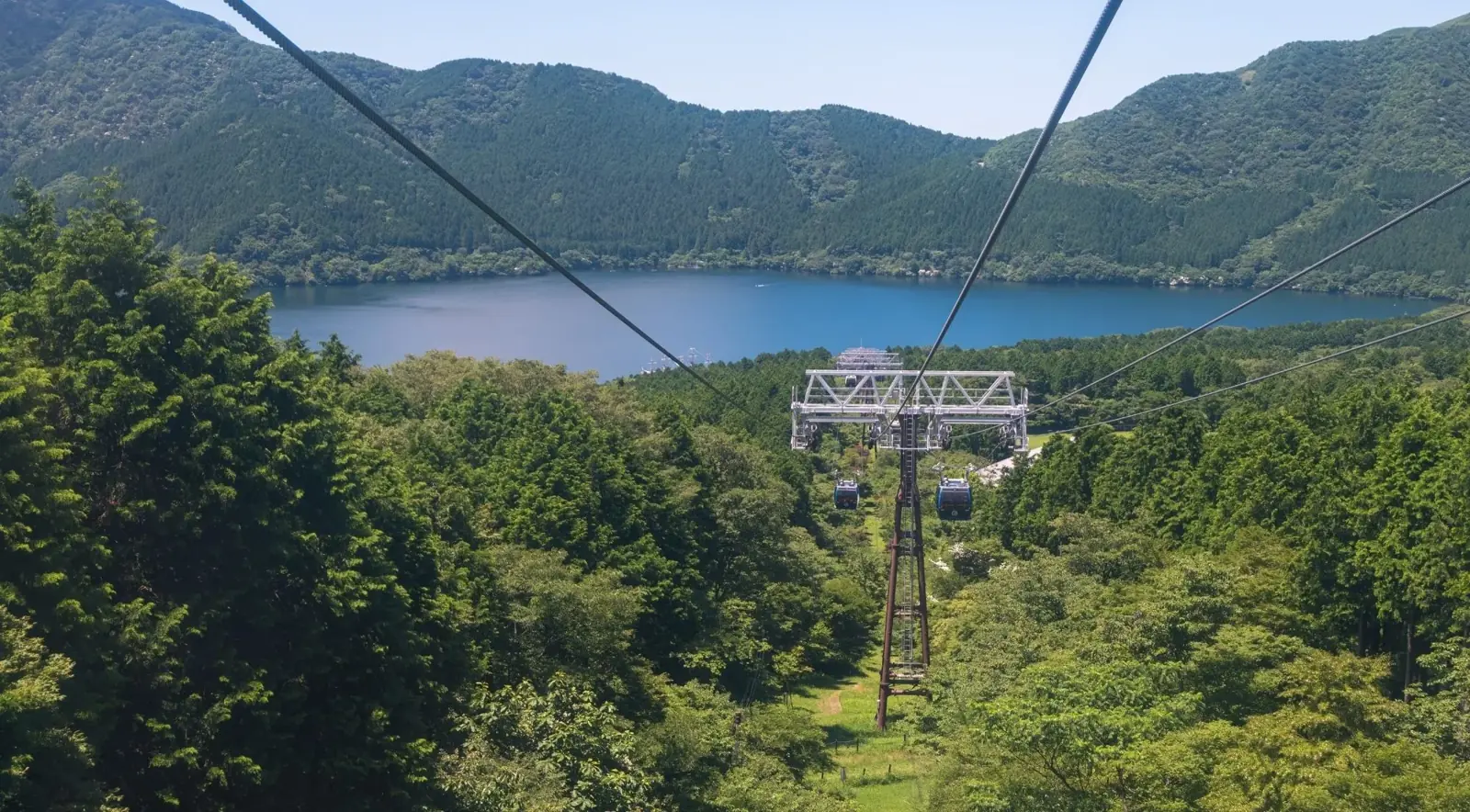
The ropeway is one of the best parts of an autumn day. You ride above the forest instead of walking through it, so you see whole slopes of color at once. The Hakone Ropeway guide covers the stations and the route.
Owakudani in Autumn
Owakudani looks dramatic at any time of year. In autumn the mountains around it turn color while the valley itself stays bare, gray and steaming, and that contrast makes good photographs. More in our Owakudani guide.
How Long Should You Spend at Owakudani?
Around 45–60 minutes is enough for most day-trippers. In autumn, add a margin for queues, crowded viewing areas and the wait to board the ropeway again.
Lake Ashi in Autumn
Lake Ashi is another autumn highlight. The hills around the lake can show strong color, usually from early November, and the sightseeing cruise gives you wide views across them. See the Lake Ashi guide for the piers and the walk to the shrine.
Lake Ashi Cruise in Autumn
Take the cruise on a clear day if you can. You may get foliage along the shore, Mount Fuji above the far end of the lake and open water views. Our page on whether the Hakone pirate ship cruise is worth it covers the routes and fares.
Hakone Shrine in Autumn
Hakone Shrine sits in dense cedar forest beside Lake Ashi, and the colored leaves along the approach make it even more atmospheric in autumn. Our Hakone Shrine guide covers the grounds and the walk from Moto-Hakone.
Is Hakone Shrine Crowded in Autumn?
It can be. The torii standing in the lake is the most popular photo spot. If the queue for a picture under the gate is long, skip it: you can still see the torii, photograph it from the shore nearby and spend the time exploring the shrine grounds instead.
Best Autumn Photo Spots
For a first day trip, focus on these:
Hakone Ropeway
Broad views over the mountain slopes.
Owakudani
Dramatic contrast between the bare valley and the colored hills.
Lake Ashi
Foliage and lake scenery together.
Moto-Hakone
The classic Hakone view across the lake, with Fuji behind on a clear day.
Hakone Shrine
Forest and the red lakeside torii.
Autumn Hakone With an Onsen
This is one of the best seasonal pairings. After a cool day in the mountains, a hot spring is far more appealing than in humid midsummer. A good autumn onsen route is:
Tokyo → Owakudani → Lake Ashi → Hakone Shrine → Hakone-Yumoto onsen → Tokyo
You may need to shorten another stop to fit it in. Our guide to Hakone onsen for day visitors lists baths that take people without a room booking.
Should You Stay Overnight in Autumn?
If your budget and schedule allow, autumn is a good season to spend one night in Hakone. You get an evening onsen, slower sightseeing, a second chance to see Mount Fuji, a quieter Hakone after the day-trippers leave and early-morning light on the leaves.
What Should You Wear?
Layers. The weather can be quite different in Tokyo and in the higher parts of Hakone. Bring:
- comfortable walking shoes
- light layers
- a warmer outer layer from mid-November
- rain protection if the forecast calls for it
Owakudani and Lake Ashi can feel colder and windier than Tokyo.
Does It Rain in Autumn?
It can. Rain does not ruin a Hakone trip, but it can hide Fuji and cut the views from the ropeway and the lake. Severe weather, including typhoons in early autumn, can stop the ropeway and the boats. Check the operating status before you leave Tokyo.
What if the Weather Is Bad?
Move the day toward:
- an onsen
- the Hakone Open-Air Museum
- indoor museums
- Hakone-Yumoto
If the ropeway is closed, you may have to give up the classic loop and plan a shorter day around the lower areas. If you are thinking of going later in the season, our guide to Hakone in winter covers December to February, including the scheduled 2026-27 ropeway closures. For the first weeks after the leaves, see Hakone in December 2026.
Is Hakone Busy on Autumn Weekends?
Yes, it can be very busy. If you can choose between a Saturday and a Tuesday, pick the Tuesday.
Should You Reserve the Romancecar?
In autumn, yes. Reserve your seats ahead, especially for weekend mornings, peak foliage dates and popular return times in the late afternoon. Our guide to getting from Tokyo to Hakone compares the Romancecar with the other routes.
Do You Need the Hakone Freepass?
For the classic autumn loop it can be very useful. The day may involve the mountain railway, the cable car, the ropeway, the sightseeing cruise and buses, and the pass covers all of them. Our Hakone Freepass guide shows when it pays for itself.
Guided Tour or Independent Trip in Autumn?
Hakone is easy to do on your own. Go independently if you want flexibility, time for foliage photography, an onsen and control over your timing.
Choose a guided tour if you want Mt Fuji and Hakone in one day or prefer a fixed itinerary. The TAIHOU Mt. Fuji, Hakone Ropeway, Owakudani and Lake Ashi tour (from $54 per person, 4.6/5 from 8,523 reviews) includes return transport from Tokyo and a ropeway ride. The Clover Travel Mt Fuji and Hakone tour (from $49, 4.8/5 from 1,187 reviews) covers a similar mix for a little less, but you pay the Lake Ashi cruise fare yourself. Our Hakone tour vs self-guided comparison goes through the trade-offs.
Hakone or Kawaguchiko in Autumn?
Choose Hakone for more varied sights: the ropeway, Owakudani, Lake Ashi, the shrine, onsen and foliage. Choose Kawaguchiko if Mount Fuji is your overwhelming priority and you want more Fuji-focused photography. Our Hakone or Mt Fuji comparison helps you decide.
Autumn Hakone Itinerary: What to Skip if You’re Late
If crowds put you behind schedule, skip:
- long shopping stops
- the Open-Air Museum, unless it is a major priority for you
- a long queue for the torii photo
- extra viewpoints
Try to keep:
- the ropeway
- Owakudani
- Lake Ashi
- Hakone Shrine
Is Hakone Worth Visiting in Autumn?
Yes. Autumn brings together several of the things Hakone does best:
- mountain scenery
- fall foliage
- cooler weather
- hot springs
- Lake Ashi
- possible Mount Fuji views
The only major downside is the crowds. Start early, do not overload the itinerary and do not spend the whole day chasing the perfect foliage photo.
Final Advice
In autumn you can let Hakone’s standard sightseeing route do the work. You do not need a separate fall foliage itinerary. Take the ropeway across the mountains, stop at Owakudani, cross Lake Ashi, visit Hakone Shrine and look for Mount Fuji whenever the sky clears. Hakone works so well as an autumn day trip from Tokyo because you pass through the colors at each stop on the loop, without detours to separate foliage spots. Check the foliage reports and the Romancecar seats for your date before you go, because both change week to week in November.
Make a Day for Hakone
Choose your departure point, check the inclusions and leave your evening flexible for the journey back.
Check Dates & Prices